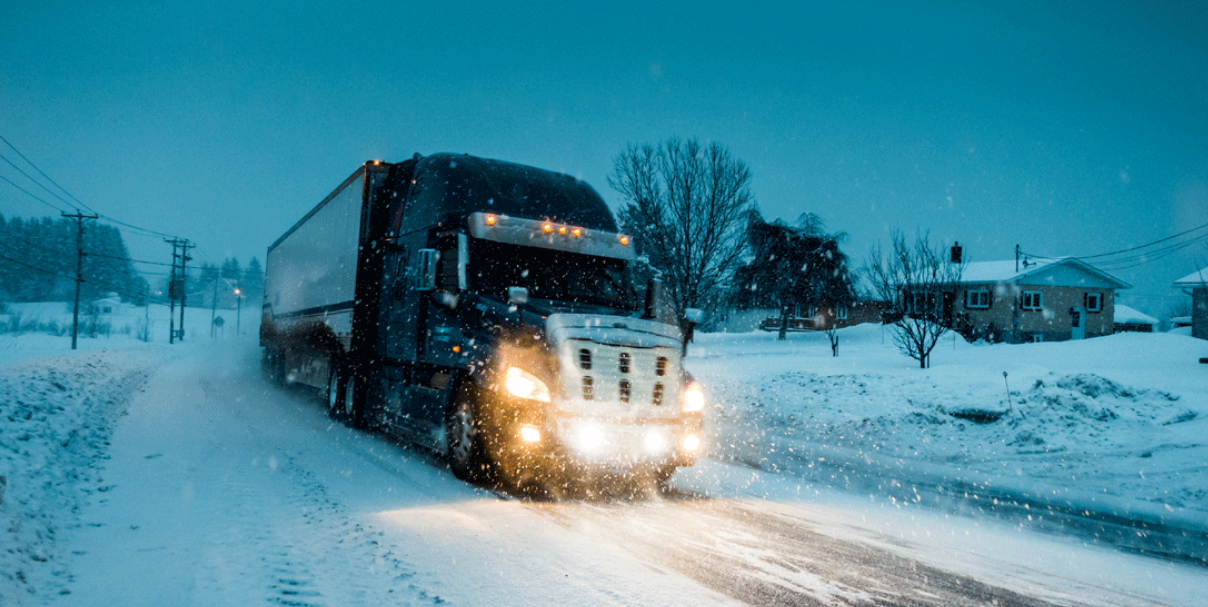
With the usual drop in temperatures and the accompanying icy-slippery roads, the emphasis on the importance of preparation and caution rises sharply. Driving over snow, ice, and freezing rain is more than a matter of experience it requires a well-thought-out plan for the safety of both the driver and the freight. The current article briefly elaborates on basic winter driving tips for truck drivers focusing on vehicle preparation, safe driving practices, and first-aid readiness. The human gatekeepers of the logistics industry should know that through the right tools, habits, and mindset, they are capable of not only preserving their own lives but of being efficient even in adverse conditions.
Vehicle Preparation for Winter Driving
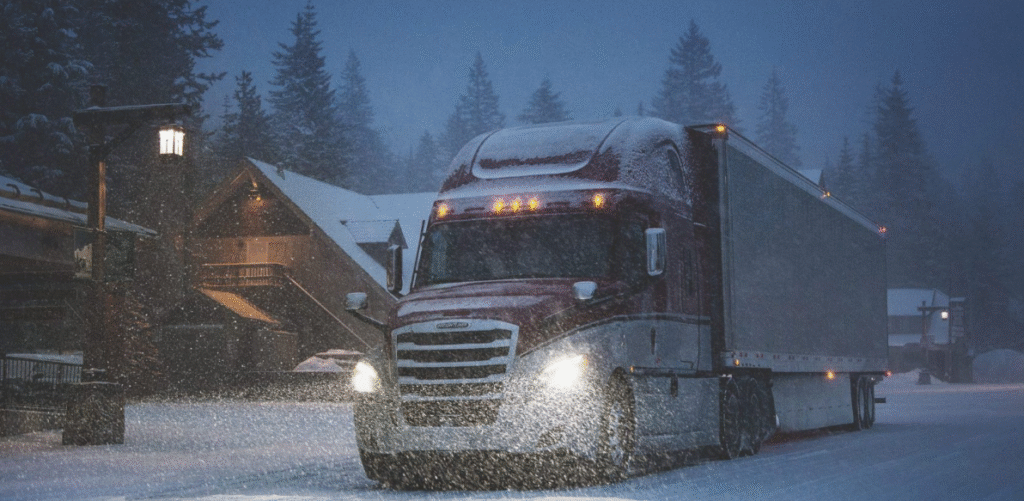
Essential vehicle maintenance is the bedrock of safe winter hauling. Driving a truck that’s not prepared for cold weather driving can easily lead to an accident. All drivers should inspect their vehicles for winter readiness by following a step-by-step winter driving checklist which confirms that setups such as winter wiper blades, heating systems, and proper defrosters are in the best of conditions.
Ensure Antifreeze and Windshield Fluid Are Adequate
The first and foremost health care for the heart and kidney is an antifreeze concentration check. Coolant liquid helps keep the engine block from freezing, whereas the heater core maintenance and heater thermostat check ensure the cab remains warm for the driver. As a rule, drivers should always make it a point to check if antifreeze is rated for subzero conditions before they consider windshield washer concentrate. Along with this, winter wiper blades and defroster operation should work well. Are you facing any visibility issues due to heavy snow? This will give you a clear view of the road. These crucial steps should be followed on frost or ice otherwise it would lead to winter driving hazards.
It’s also advisable to check battery protection cold systems and test the engine block heater use during cold nights. This can help to avoid those pesky hard starts when the temperature dips.
Check Tires and Tire Pressure
Tire tread depth and tire pressure directly affect traction on icy roads. Tires harden in low temperatures, so checking PSI regularly is crucial. Some areas demand winter tires or tire chains, and drivers must know the chain installation tips before venturing into the wilderness.
Staying correctly inflated helps make the tire better handle the hydroplaning problem i.e. when a vehicle’s tires ride on a layer of water preventing contact with the surface. Accordingly, with awareness of frost heave awareness — the cracking and shifting of pavement due to freezing conditions — drivers are more likely to avoid uneven wear from incorrect inflation. In keeping with bed length, drivers should be careful of payloads by look-out for tire loads. If the tires are not correctly fitted then a driver will either have a way better or worst case.
Be Mindful of Lighting and Visibility

Due to the short daylight hours, trucks depend heavily on their lighting devices. Drivers should check the full-size vehicle for any malfunctioning lights before each journey, the headlights, taillights, and marker lamps. Wiping off ice buildup on mirrors and using mirror de-icer usage are strategies that will create a safer lane to travel.
Moreover, winter road salt effects come with corrosion of light housings, so cleaning them is important. An important factor that contributes to visibility is windows that are free of any obstructions — truckers should work on the seals and check for cab insulation check that prevents any kind of window fogging or frost.
Safe Driving Practices in Winter Conditions
Even technologically-updated trucks will still be subject to unpredictable winter road conditions. That is where the wheel skill and discipline take place. Truckers must consciously practice proven winter driving techniques to mitigate the peril of snow, slush, and ice on their vehicles.
Adjust Speed and Heater Core Maintain Safe Following Distance
The most effective yet simplest measure is to reduce the driving speed. Less traffic means that the vehicle moves slower, allowing for more time for reacting to sudden events like the appearance of black ice, a sudden stop, or vehicles skidding in front of yours. The normal standards of following distance are made longer to offset the issue with the traction wheel.
The truckers should be on the lookout for snowplows that may move slowly, but create snow clouds that reduce visibility. Giving them the space and avoiding the risk of overtaking the vehicles on the road will make it safer for everyone and improve overall road safety.
Practice Gentle, Controlled Movements
Quirky braking, fast acceleration, and zig-zag steering could quickly shift the vehicle to a sliding state. Driving on ice is a technique of applying the brakes and throttle evenly without steering sharply. A truck should be well weighted to avoid jackknife especially when loaded.
On steep grades, careful downhill truck control is key. Lower gears, controlled braking, and a steady pace help to avoid overheating and brake fade cold. Also, the cargo should remain securely fastened — checking cargo securement winter is one adjustment to keep loads from shifting during rapid maneuvers.
Stay Alert and Take Regular Breaks
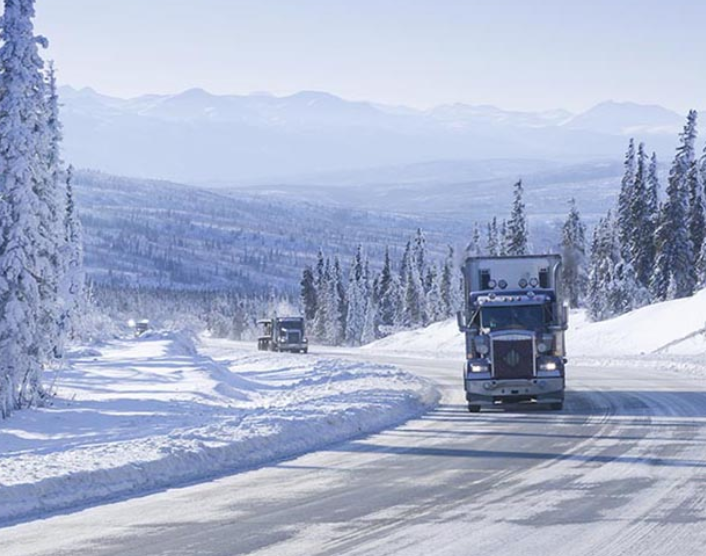
Driving a truck in the winter is not only about maneuvering the vehicle, but also about handling fatigue. The tough weather conditions, sun glare winter, and stress increase the pressure on the driver. Regular breaks are particularly helpful for keeping focus at the time when the driving distance is long, i.e. while driving in snow or on ice on bridges.
Truckers should also schedule their own rest days and avoid the risk of fatigue that comes with night time, as daylight is short, visibility is limited and hazards increase. The resolve to stop strategically not only protects the driver but also enhances overall trucker safety on long hauls.
Emergency Preparedness for Winter Driving

No matter how much you try to avert emergencies, they might still happen. What stands between a secure outcome and a dangerous situation is being ready. Every trucker should incorporate winter weather preparedness into their job by providing the tools, as well as the knowledge to carry out the task.
Carry a Winter Emergency Kit
An emergency kit is a must. Some of the things that should be included are blankets, food, water, a shovel, traction aids, and winter driving gear like insulated gloves and reflective vests. Flashlights, jumper cables, and remote roadside assistance contacts can help save valuable time.
Apart from fuel systems which require special treatment, winterized fuel filters, diesel fuel gelling treatments and good fuel management winter practices all prevent breakdowns. Truckers should address warmth along with efficiency by practicing idle reduction winter strategies and relying on a proper cab insulation check for heat retention.
Know How to Handle Skids and Loss of Traction
The understanding of different winter driving precautions is not all about avoidance but means knowing how to react correctly. For instance, if like other vehicles, the truck gets into a skid, the driver should NOT go oversteering the vehicle, but rather apply steady with controlled corrections. Skid control knowledge could save accidents.
Road temperature sensors and defroster operation are key elements to track the conditions of the road. For example, shaded roads and bridges are likely to freeze first.
Plan Routes and Monitor Weather Conditions
Ultimately, the use of route planning tools and dedicated weather radar trucking applications makes route planning a success. This is what they were meant to do: provide notifications of snow and ice, hazards, and closures, and offer reroute options. Truckers should always have backup routes at hand and keep an eye out for updates on winter driving hazards.
The knowledge of winter road salt effects on pavement and vehicles will allow for the development of better truck maintenance stops. Extending the frost heave awareness concept to areas with broken highways/issues also prevents surprises.
Conclusion
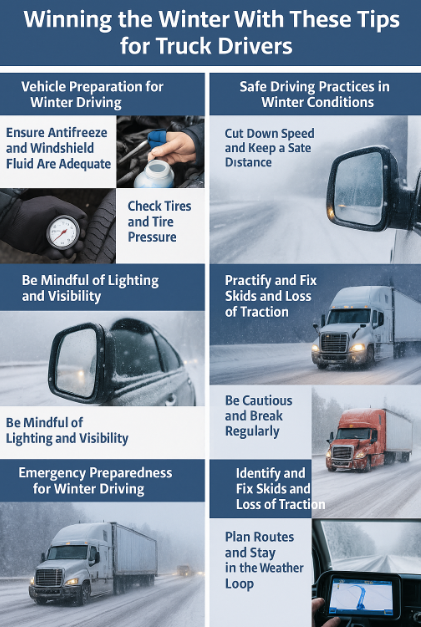
Driving a truck in winter needs more than guts it calls for careful preparation, disciplined driving, and continuous watch. By carrying out truck maintenance thoroughly, drivers could combine it with proven winter driving techniques and robust emergency preparedness to ensure that even the roughest storms are negligible. These winter driving tips for truck drivers are more than recommendations, they are actually the best practices that can ensure the truck safety of the trucker and all who share the road with him.
The truckers that learn these habits well will see that winter driving safety is not a matter of luck, but readiness. Every vehicle inspection, careful mile, and winter weather preparedness step taken lays down the basis for road safety, even during the hardest times. By treating the season like a challenge that can be solved through knowledge and discipline, the drivers set themselves and their fleets up for safer and successful journeys.
16 essential truck driver winter weather safety tips
Truckers FAQ on Winter Driving
Do truck drivers always need to use tire chains in winter?
Not all the time, but several states and mountain passes necessitate tire chains during adverse weather conditions. Learning chain installation tips , truck driving tips in advance will make it easier for the drivers to adhere to safety and the law.
What is the remedy for the gelling of diesel fuel?
Use winterized fuel filters, anti-gel additives, and keep tanks as full as possible. With the right kind of fuel management winter tactics, diesel fuel gelling is preventable.
What is the main threat for truck drivers in the season?
The most life-threatening problems are black ice, low visibility conditions due to storms, and fatigue due to protracted hours in stressful winter road conditions.
Is it advisable to run my truck overnight for heating?
Frequent idling leads to increased fuel consumption and wears machinery. Instead, use idle reduction winter strategies, check the cab insulation check, and properly utilize the engine block heater use.
No Responses